
HereApp
If you're here, we know. If you're not, we know that too.
HereApp
Case Study · 2025
About this product
A GPS geo-tracking attendance platform for educational institutions eliminating proxy attendance, automating class management, and giving instructors real-time student engagement analytics.
Timeline
14 weeks
Category
Web & App
Delivered
2025
Stack
Product Preview
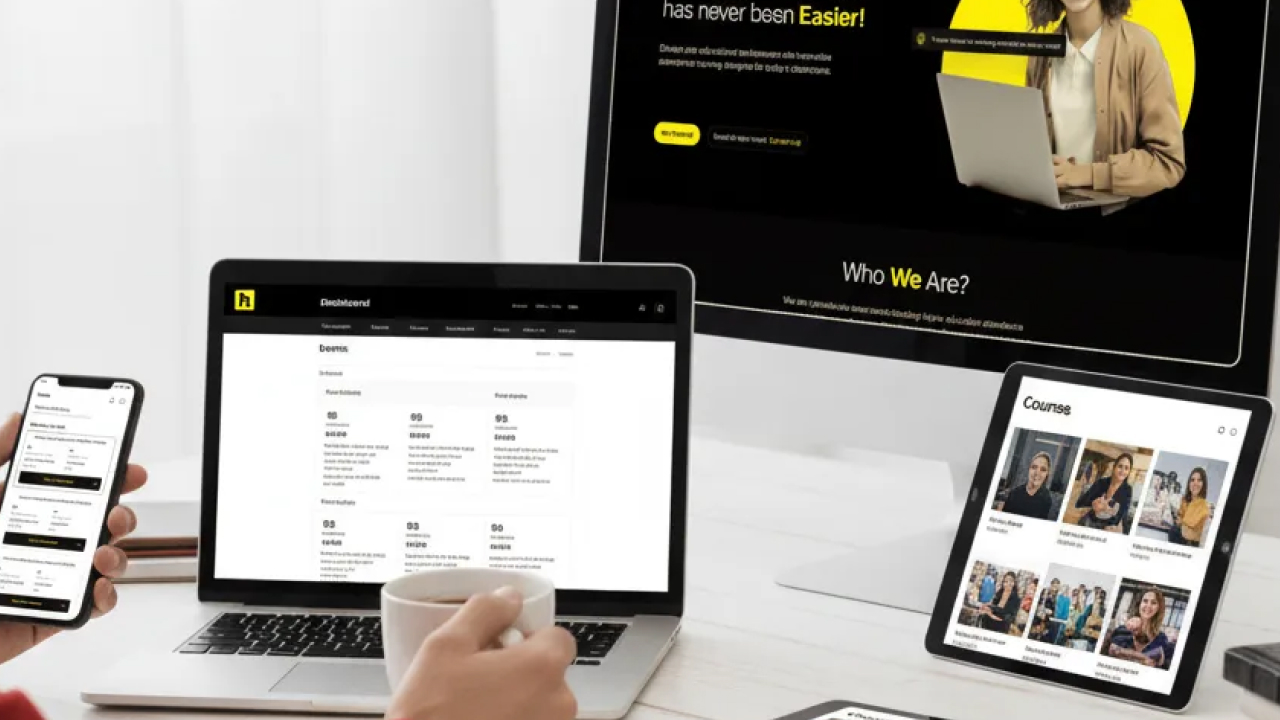
Overview
The situation
Educational institutions have been fighting the proxy attendance problem for years students marking each other present, attendance sheets filled in after the fact, and instructors with no reliable way to know who was actually in the room. HereApp was built to solve this definitively. By combining GPS geo-tracking with a one-tap instructor interface and a real-time analytics dashboard, the platform made attendance accurate, automated, and actionable giving institutions the data they needed to identify at-risk students before it was too late.
Challenge
What we had to solve
The core technical challenge was building a geo-tracking system accurate enough to confirm physical classroom presence without creating false positives from students in adjacent rooms or nearby buildings. The acceptable GPS radius had to be configurable per institution and per classroom a lecture hall in a dense urban campus required tighter tolerances than a standalone building. Beyond the location engine, the platform had to serve two completely different user types instructors who needed operational simplicity and students who needed a frictionless check-in experience while feeding a rich analytics layer that gave administrators visibility across the entire institution.
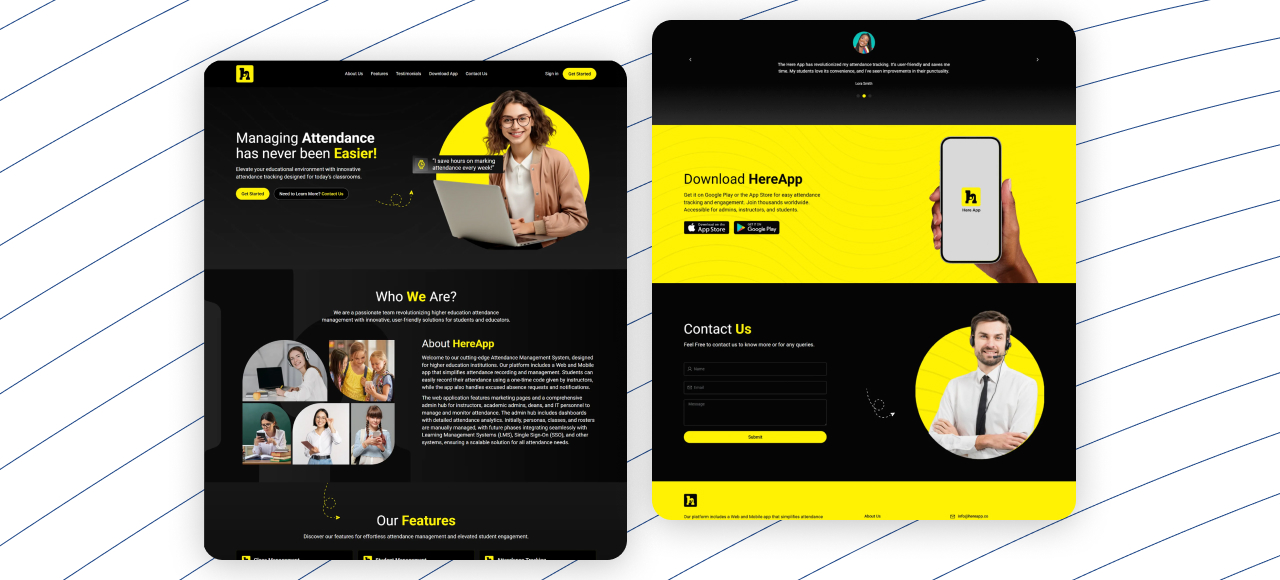
Student GPS Check-In Flow
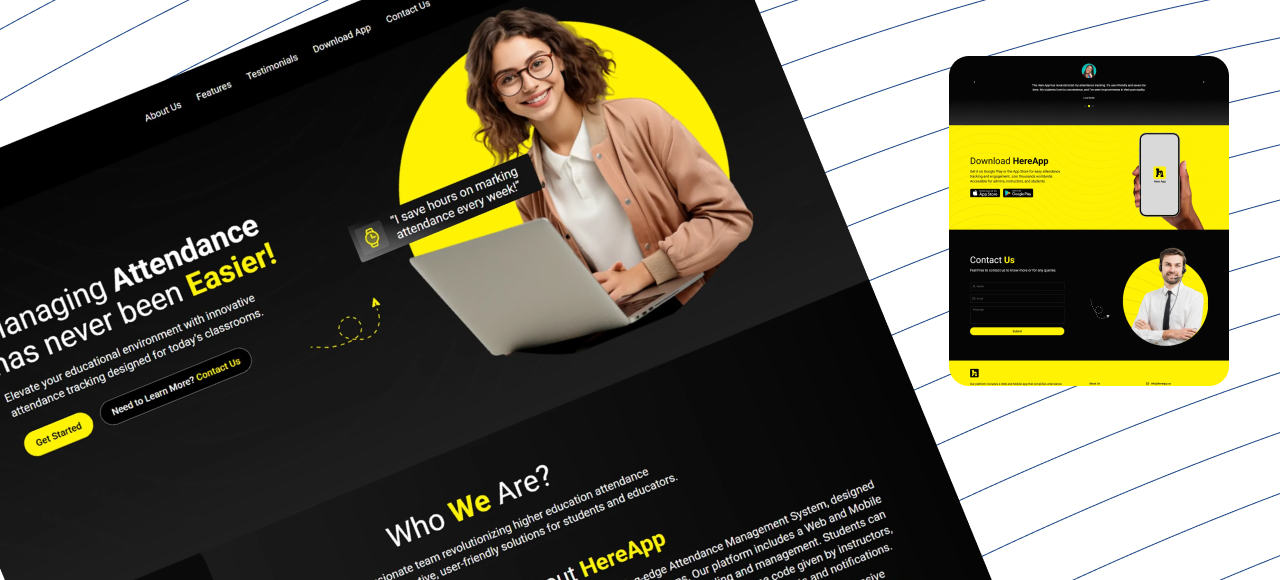
Instructor Session Dashboard
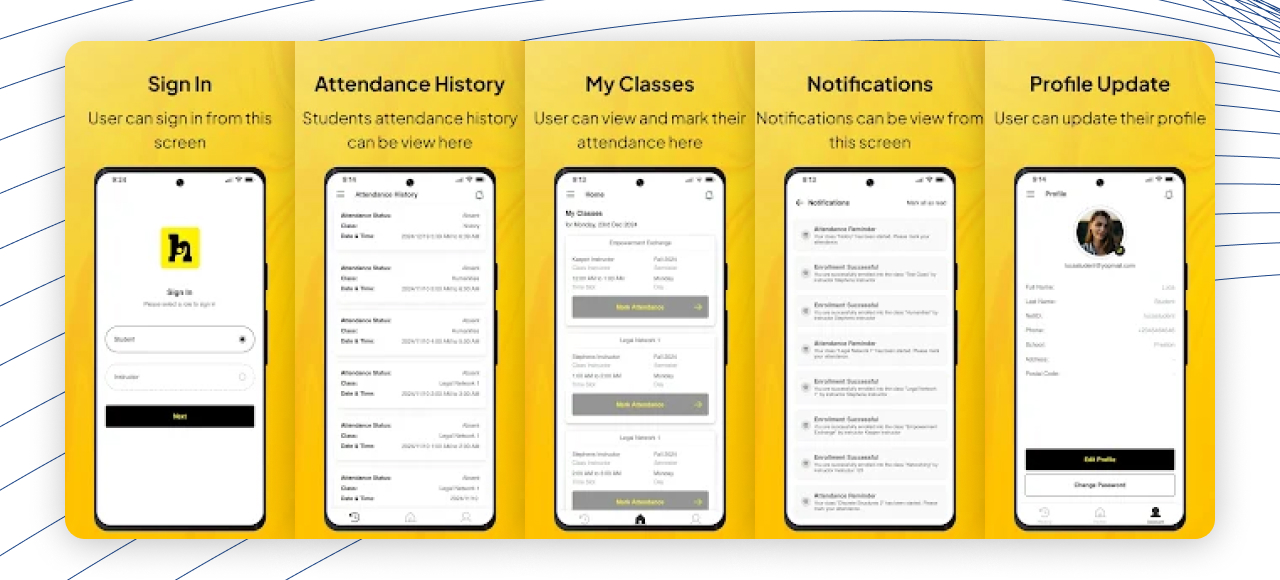
Real-Time Attendance View
Admin Analytics & At-Risk
Case Study
How we built it
Discovery & Technical Scoping
We ran discovery sessions with both sides of the platform instructors frustrated by manual attendance processes and administrators who had no reliable engagement data on at-risk students. The GPS accuracy requirements were scoped in detail: configurable geofence radii per classroom, handling of edge cases like GPS signal variance in large buildings, and fallback verification options for low-signal environments. These technical constraints shaped the entire location engine architecture before a line of code was written.
UI/UX Design & Prototyping
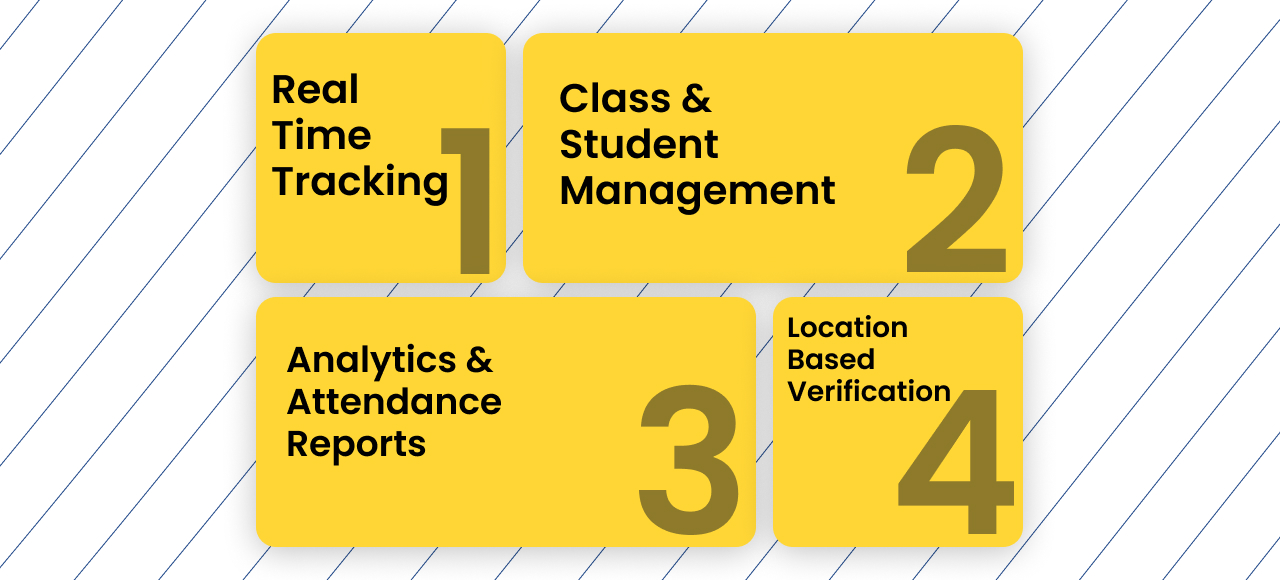
Using Figma, we designed three distinct interfaces a student mobile check-in flow optimised for speed and simplicity, an instructor dashboard for one-tap session management and real-time attendance visibility, and an admin analytics panel with attendance trends, engagement scores, and at-risk student flagging. The student check-in was designed to complete in under five seconds from launch to confirmation. Wireframes and interactive prototypes for all three roles were signed off before development began.
GPS Geo-Tracking Engine
The location verification engine was the most technically demanding component of the build. Using the browser and mobile device GPS APIs, we built a geofence system that validated student coordinates against configurable classroom boundaries at the moment of check-in. The engine handled GPS drift, signal variance, and multi-floor building scenarios with a configurable tolerance radius that institution admins could set per classroom. Anti-spoofing logic was implemented to detect and flag coordinate manipulation attempts, closing the most common technical workaround for proxy attendance.
Core Platform Attendance & Session Management
The MERN backend was built with MongoDB as the data layer, storing session records, attendance events, geofence configurations, and student engagement histories. The instructor dashboard was built in React with real-time attendance updates using WebSockets instructors could see check-ins appear live as students entered the geofenced area, with the ability to manually override or flag individual records. Automated session triggers allowed instructors to open and close attendance windows with a single tap, with configurable time limits to prevent late check-ins.
Analytics, At-Risk Detection & Launch
The analytics layer was built to surface actionable insights rather than raw data. Attendance trend charts, engagement scoring per student, and automated at-risk flagging triggered when a student's attendance rate fell below a configurable threshold gave instructors and administrators the early warning system the institution had been missing. Both web and mobile apps were QA tested end-to-end across devices and GPS environments before launch. The platform was delivered on schedule with full documentation and a scalable architecture ready to onboard additional institutions.
Outcomes
Attendance made accurate, automated, and actionable.
GPS
Geofence engine with anti-spoofing
configurable radius per classroom proxy-proof
<5s
Student check-in time
from app launch to confirmed attendance
↓90%
Reduction in manual attendance work
one-tap sessions replaced paper and spreadsheets
RT
Real-time dashboard updates
WebSocket-powered live attendance as it happens
27%↑
At-risk student identification rate
automated flagging surfaced issues weeks earlier
14wks
Full delivery timeline
discovery to production-ready web and mobile
Proxy attendance was a constant problem we couldn't solve with manual processes. HereApp fixed it at the infrastructure level GPS verification means the data is reliable, and the analytics have genuinely changed how our instructors identify students who need support before they fall too far behind.
HereApp
Client, Educational Technology
Want results like these?
Let's talk about what we can build together.